
[Essay] "How did I end up here?"
Career drift and the surprisingly reasonable decisions that took you off course

“Wait, this is my job?”
You’re updating your resume, already a chore, and now you need to boil down your job to a handful of bullet points that highlight the value you’ve created, your accomplishments and the skills you’ve gained. As you think about what you can put down, you realize that most of your time is spent updating a deck, explaining to non-designers why it takes months to manufacture a new design, or managing a team when the goalposts are continually moving. Also, it’s hard to find numbers in the sales report from marketing. The feeling isn’t anger it’s more like disorientation, “When did this become my job?”
I talked about creative drift in the previous post. Creative drift is internal; it’s a lack of connection to what energizes your creativity. Career drift is more external, it’s less about your lack of creative energy and more about the accumulation of roles, decisions, projects and circumstances that moved you somewhere else. One is about how the work feels. The other is about where the work has taken you.
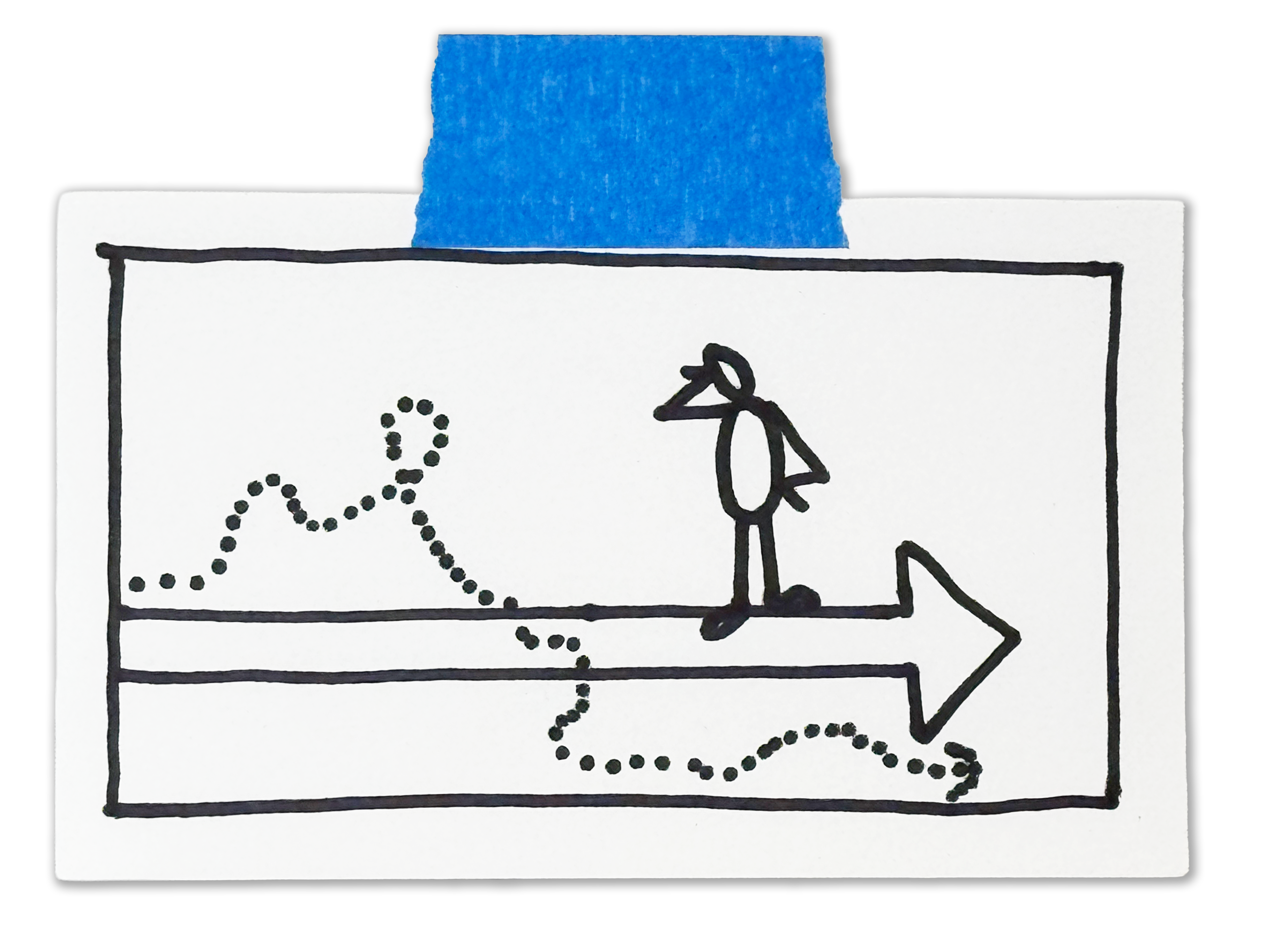
Most people don’t make deliberate decisions to end up in the wrong place. They drift. Not dramatically and not all at once. They drift gradually, maybe even imperceptibly. One opportunity leads to another. A role expands or steps into management. A project becomes a position. What once felt temporary becomes solidified. And over time, you look up and realize you’re somewhere you didn’t consciously choose but also didn’t resist. This is career drift—the slow movement away from alignment between what you do and what you want, shaped as much by circumstance and momentum as by intention. Accumulating over time, each decision ended up narrowing your choices for the next step. Career drift can be both good and bad. It can pull you into new opportunities, fields or roles that you didn’t expect and you find you have strengths or passion there. What we’re most concerned about is when you’ve drifted away from something that feels right to you.
It can look like:
· Taking on projects because they’re available, not because they’re meaningful
· Following opportunities that make sense on paper
· Gradually using a narrower and narrower slice of your abilities
· Being disconnected from the parts of work that once energized you
Creative careers are particularly susceptible to drift because they often lack clearly defined career paths, consistent feedback loops and relevant performance criteria. At the same time, creative people tend to be adaptable, curious, willing to say yes to opportunities. While those are strengths in creative professionals, they also can unintentionally accelerate drift: the ability to flex, adjust, and take on new challenges can slowly pull someone away from their core interests or strengths.
Where things really get tough is when career drift overlaps with creative drift. If you feel disconnected from your own internal signals (curiosity, inspiration, desire to make something) AND you look around at where your career is and wonder how you got there, then we get a sense of misalignment that’s hard to name and hard to navigate.
The instinct is often to look outward for answers—to search for the right role, the right move, the right next step. But before you can choose a direction, you have to reflect and understand yourself where you currently are because the goal isn’t just to change what you do, it’s to reconnect with your creativity, your inspiration and notice what pulls you forward.
To get a sense of where you’re at, refer back to the inflection points exercise, this time looking at which decisions were driven by what was available rather than what was wanted? Which ones narrowed rather than expanded what came next? Look back over your last 3-5 years and identify the decisions that felt small at the time but had a larger cumulative effect. By the way, these don’t have to all be negative! Seeing which decisions led to something great is equally as important as seeing where they didn’t. Don’t beat yourself up if you find instances where you made a decision based on money, location or another constraint. Remember, this is about gathering information, not judging past choices.
The goal here isn’t to re-litigate past decisions or assign blame for where you ended up. Every one of those choices made sense at the time or, were ones you had to make. The point if all this is to see the patterns, to understand the mechanics behind your particular drift so you can be more deliberate about what comes next.
Career drift isn’t a character flaw. It’s what happens when capable, adaptable people navigate a world that doesn’t offer clear paths and where things are continually changing. The question isn’t “how did I let this happen.” It’s “now that I can see it, what do I want to do about it?” That’s a much more interesting question — and it’s the one we’ll keep working on from here.